


Novelix
CHEEREAD LIMITED
I spent time with Novelix as a romance-reading app, and my first impression was that it is aimed at readers who want emotionally direct stories rather than a broad reference library. Its focus sits in Books & Reference, but the experience feels closer to a dedicated digital fiction shelf: romance, werewolf fiction, novels, and short-form stories are the main attraction. That narrow focus is useful when you already know the kind of escape you want, although it also means the app is not a substitute for a general ebook reader or a serious research tool.
The app is free to install, which makes it easy to try without committing money at the beginning. At the same time, in-app purchases range from $9.99 to $149.99 per item, so I would approach the reading economy carefully. The important question is not simply whether the download costs nothing, but whether the way you read encourages you to spend later. I found that this is the kind of app where a reader should decide on a personal budget before becoming deeply invested in a long-running story.
How Novelix feels to read in everyday situations
Readability and navigation for long sessions
The strongest reason to open Novelix is convenience. When I wanted a quick romantic chapter during a quiet break, the app’s focused identity made more sense than opening a general bookstore filled with unrelated titles. A reader who enjoys dramatic relationships, supernatural romance, and serialized fiction can get to the desired mood faster than they might in a large, mixed catalog. That concentration is one of the app’s practical advantages, especially for people who choose books by feeling rather than by literary category.
I also see a difference between browsing and committing to a story. Browsing romance titles is usually low effort, but continuing a long story requires the app to make the reading path clear. I paid attention to whether I could return to the same narrative without having to remember where I stopped. For a mobile fiction app, that small detail matters more than decorative presentation: losing a chapter or having to search repeatedly can turn a relaxing habit into unnecessary work.
Novelix is best approached as a phone-first reading space. That makes it suitable for short sessions, such as reading while waiting for an appointment or winding down before sleep. It is less naturally suited to someone who wants the page-like control of a dedicated ereader, a large-screen reading layout, or a carefully organized personal library. If your priority is owning and managing books across several reading systems, a conventional ebook store may be the better fit.
Related News

Why WhatsApp Messenger Still Makes Everyday Communication Feel Easy

Jurassic World: The Game Is the Better Dino Tycoon for Strategic Players

Threads in Real Life: Who Should Join, Lurk, or Leave

How SHEIN Turned Shopping Into an Endless Content Feed

How to Make Fortnite Feel Smarter on Mobile

Should You Switch to Microsoft Outlook on Mobile?
For readability, I would recommend testing the app during the time of day when you normally read. Text that feels comfortable in bright daytime conditions can feel different in a dim room, and a romance reader may spend much longer in the app than someone checking a short reference entry. I would also keep sessions moderate if the phone screen begins to feel tiring. The app’s appeal encourages “one more chapter,” so comfort depends partly on how deliberately you manage the session.
Navigation also has an inclusive dimension. People who process information more slowly may benefit from a focused fiction environment because there are fewer unrelated subjects competing for attention. On the other hand, readers who need highly predictable organization may find a story-centered catalog less comfortable if discovery depends heavily on browsing. My advice is to judge the app not only by how quickly it shows an appealing story, but by how easily you can leave, return, and regain your place.
Motor and sensory considerations
Reading on a phone can work well for users who prefer short interactions. A tap or swipe is generally less demanding than typing a long search query, and the format suits readers who want to hold the device in one hand. That said, any mobile reading routine can become awkward for people with limited hand movement, tremor, or difficulty making repeated precise gestures. Long chapters may require frequent scrolling or page changes, so the physical effort can accumulate even when each individual action seems small.
Gallery
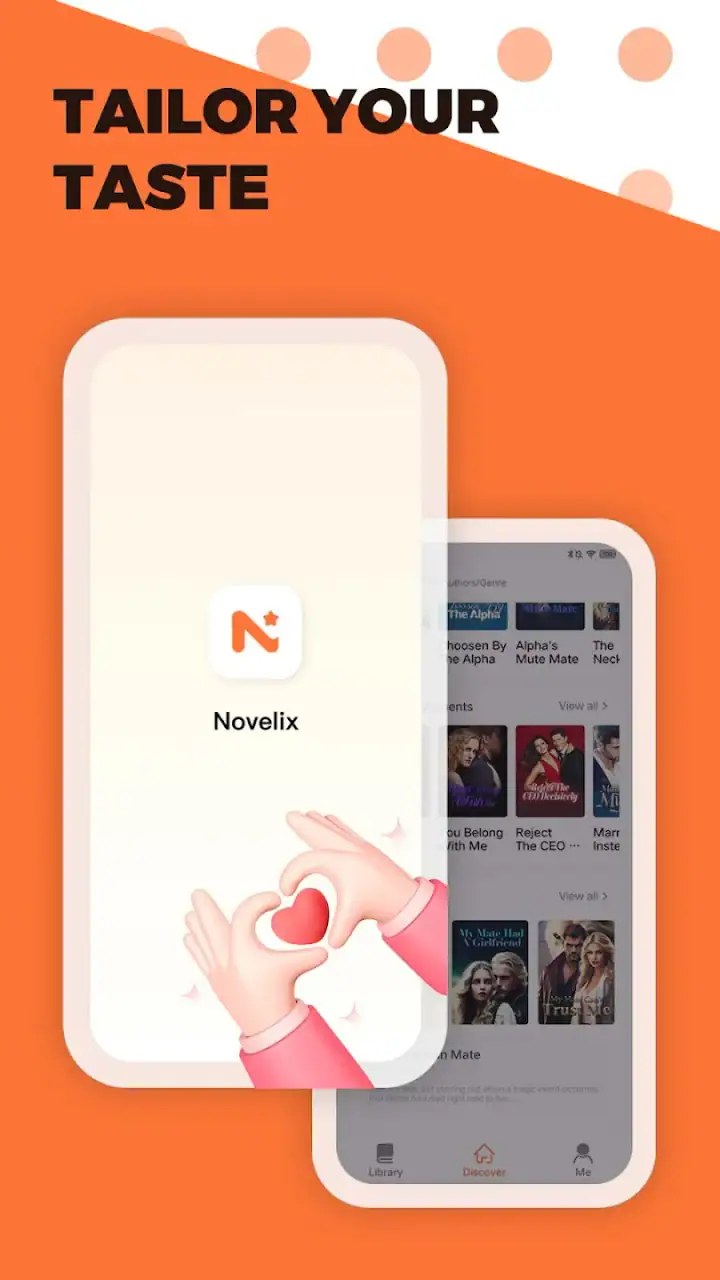
I would not describe Novelix as automatically accessible for every ability. The available product information identifies the app as suitable for a Teen audience, but that age label does not tell me that its reading controls accommodate every user. Readers who rely on enlarged text, screen readers, strong contrast, reduced motion, or alternative input should test the actual experience on their device rather than assuming that a reading app will meet those needs.
For sensory comfort, the main advantage is that the content is primarily text-based fiction rather than a fast-moving game or a video feed. That may make it easier for someone who wants a quieter activity. Still, the surrounding browsing experience can involve visual covers, category choices, and other elements that may compete for attention. If visual clutter is tiring, I would open the app with a specific reading goal instead of spending a long time browsing from one title to another.
Audio is another important consideration. Novelix is designed around romance novels and stories, but I would not choose it on the assumption that it replaces an audiobook service or a fully voice-first reader. Someone who cannot comfortably read text on a phone should confirm that the device’s own reading assistance works well with the app. If spoken navigation and listening are central to your routine, an audiobook platform with clearly developed playback controls is likely to be a safer choice.
People who are sensitive to intense themes should also remember that romance and werewolf fiction can involve heightened conflict, danger, jealousy, or emotionally heavy situations. The Teen rating gives a broad age signal, but it does not describe the tone of every individual story. I would sample a story before recommending it to a younger reader or to anyone who prefers gentle, predictable fiction.
Situational access: when the app fits best
A realistic use case is a commuter who has ten minutes before work. Instead of carrying a paperback, that reader can open Novelix, continue a romance story, and stop when the train arrives. The same pattern works for a parent waiting during an after-school activity, a student taking a short break, or anyone who wants fiction without planning a full reading session. The app’s subject focus helps in these moments because the user is usually looking for an emotional story, not a complicated research workflow.
It can also suit readers who use fiction as a decompression ritual. After a demanding day, choosing a familiar type of romance may require less mental effort than deciding among thousands of unrelated books. I found that this kind of focused selection can be more welcoming for someone who knows the atmosphere they want but does not want to compare authors, editions, and formats for a long time.
However, situational access changes when connectivity, battery, or privacy becomes important. A person planning to read during travel should think about whether the desired story is available in the way they need before leaving a reliable connection. I would not build a trip around assumptions about offline reading or uninterrupted access unless the app clearly demonstrates those options on the device. A downloaded paperback or an established ebook reader can be more dependable for travel planning.
The same caution applies to shared devices. If several people use one phone or tablet, a personal fiction app may not feel private or convenient. A reader may prefer a separate account or a dedicated reading device, particularly when stories are personal and the app’s recommendations reflect individual interests. This is not a flaw unique to Novelix, but it affects whether the app fits a household rather than a single reader.
Novelix may be a good choice for a teenager or adult who already enjoys serialized romance and wants an easy mobile habit. The Teen content rating makes it more appropriate to discuss the app in that age range than to treat it as a children’s reading tool. I would still encourage parents and guardians to look at the individual stories, because a general rating cannot replace judgment about themes, maturity, and emotional intensity.
Costs, commitment, and the barriers that remain
The free entry point is helpful, but the purchase structure deserves attention. In-app items can cost from $9.99 up to $149.99, which is a wide spread for a reading app. I would not tap through a purchase simply because a story has become compelling. Instead, I would pause, check what the purchase unlocks, and decide whether finishing that story is worth the expense compared with buying a complete ebook or using a subscription service.
This is especially important for readers who prefer predictable spending. A traditional ebook often presents a clear price before the reading commitment begins. A serial fiction app can feel cheaper at first while making the total cost harder to judge if a story is divided into multiple paid steps. That does not make Novelix unsuitable, but it changes the kind of reader who will enjoy it. People who like discovery and episodic reading may accept that model; people who want a single, final price may become frustrated.
The app’s popularity gives some reassurance that it has found an audience. It carries a 4.3 average from around seventeen thousand ratings, with roughly two thousand four hundred written reviews, and has passed one hundred thousand installs. Those figures suggest meaningful use, but they should not be treated as proof that the app will match every reader’s needs. Ratings tend to combine opinions about story selection, reading comfort, payments, and device behavior, so I would still use the first session as a personal test.
Another barrier is content fit. The app’s identity is very specific, and that is both its strength and its limitation. If you want romance with werewolf themes, dramatic novels, and mobile stories, the focus can feel welcome. If you want history, technical reference material, poetry, textbooks, comics, or a large general-purpose public-domain collection, you will probably spend more time looking for something that is not really the app’s purpose.
Readers who need advanced catalog management may also prefer a conventional ebook application. A general reader often makes it easier to organize books from different sources, maintain a long-term personal library, and move between formats. Novelix makes more sense as a destination for its own style of fiction than as the central archive for everything you read.
There is also a concentration issue that is easy to overlook. Serialized romance is designed to keep emotional momentum going, and that can be enjoyable, but it may make stopping difficult. My practical tip is to decide before opening the app whether you have time for one chapter or a longer session. This simple boundary helps prevent an inexpensive, short break from turning into an unplanned purchase or a late night.
Who should use it, and who should choose something else
I would recommend Novelix to a reader who wants a free starting point for mobile romance fiction, especially someone drawn to supernatural relationship stories and quick, ongoing reading sessions. It is also a reasonable option for people who find broad bookstores overwhelming and would rather browse within a clear emotional genre. The app’s developer is CHEEREAD LIMITED, and the current version is 1.2.1, so keeping the installation current is sensible when using it on a compatible phone.
The technical entry requirement is modest: it supports Android devices running version 6.0 or later. That makes it reachable for people who do not own a recent phone, although actual comfort will still depend on screen size, performance, and the device’s accessibility settings. A larger display may help readers who need more visual space, while a smaller phone may be preferable for portability but less comfortable for extended chapters.
I would steer away from it if your main goal is academic reference, offline travel reading, audiobook listening, or a library you can manage independently of one fiction platform. I would also be cautious if unpredictable spending is stressful. In those cases, a library app, a standard ebook store, a subscription-based reading service, or an audiobook application may offer a clearer match.
One useful workflow is to treat Novelix as a sampling tool rather than immediately as your permanent library. Try the free experience, identify whether the writing style and story pacing suit you, and only then consider spending. Keep notes about the titles you genuinely want to continue, and set a purchase limit before the plot becomes urgent. That approach preserves the app’s convenience without allowing the serialized format to make the decision for you.
Another practical tip is to compare the reading situation, not just the title. If you read mainly in short phone sessions, Novelix may be more convenient than a paperback or a large ebook catalog. If you read for an hour every evening, a dedicated ereader could be kinder to your eyes and easier on your hands. The “best” option changes with the length of the session, the lighting, the device, and whether you need listening or text customization.
My inclusive verdict after using the app
Novelix succeeds when its focused romance identity matches what you want at that moment. I like the idea of opening one app for emotionally driven stories instead of searching through a general bookstore, and the free download lowers the effort required to test that experience. Its mobile format is particularly suitable for short breaks and casual routines, while its Teen rating gives readers a useful starting point for thinking about age suitability.
Its inclusive value is more limited than its genre appeal. Text-based reading can be calmer than video or game content, and a phone can be convenient for many users, but I would not assume that every reader will find the controls, text presentation, or browsing flow equally comfortable. People with visual, motor, sensory, or listening needs should test Novelix with their usual device settings and assistive tools. That is the fairest way to decide whether the app supports their particular reading method.
The biggest trade-off is between easy discovery and financial predictability. Romance fans may enjoy the momentum and the specialized selection, but the possible purchase range means that a free start does not guarantee a low total cost. I would use it with a clear spending boundary and compare the price of continued access with complete books or other reading services.
Overall, I see Novelix as a focused companion for readers who want romance and story-driven escapism on a phone, not as a universal reading solution. Choose it for genre-focused mobile reading, test its comfort with your own accessibility setup, and decide on purchases slowly. If that combination suits you, it can become an enjoyable part of a daily reading routine; if you need broad reference content, robust listening support, or complete control over your library, another kind of reading app will serve you better.
FAQs for Novelix
What is Novelix and what can I use it for?
Novelix is an entertainment app designed for users who enjoy discovering and reading serialized stories, novels, or other fictional content on a mobile device. Its exact catalog and available tools may vary by version and region, but the app generally focuses on convenient access to stories, browsing by genre, and continuing your reading wherever you are. Before downloading, check the current store description to confirm the content categories and supported features.
Is Novelix free to download and use?
Novelix may be available as a free download, but some stories, chapters, premium collections, or convenience features can require in-app purchases or a subscription. Free access may also include advertising or limitations on how much content you can read each day. I recommend reviewing the pricing details shown in the app store and checking the purchase screen carefully before confirming any payment or starting a trial.
Does Novelix require an internet connection?
An internet connection is normally needed to download the app, sign in, browse the catalog, synchronize reading progress, and load new chapters or media. Depending on the version of Novelix, selected content may be available for offline reading after it has been downloaded, although this is not guaranteed for every title. If offline access matters to you, verify the download option inside the app before relying on it while traveling.
Is Novelix safe for children and suitable for all ages?
Novelix may contain stories involving romance, conflict, mature themes, or other content that is not appropriate for younger readers. The available material can also vary by author, category, language, and region. Parents should review the app-store age rating, privacy information, and individual story descriptions before allowing a child to use it. If the app offers account or parental controls, configure them before handing over the device.
What permissions and account information does Novelix require?
The permissions requested by Novelix can depend on your device, operating system, and installed version. A reading app may request network access, notifications, storage access for downloads, or account details such as an email address when synchronization is enabled. Review the permission prompts instead of approving everything automatically, and read the privacy policy to understand how account data, reading activity, and device information may be collected or used.
Pros
- Clean interface makes browsing novels simple and intuitive.
- Personalized recommendations help users discover books matching their interests.
- Reading progress sync keeps your place across supported devices.
- Regular content updates provide fresh novels and stories to explore.
- Adjustable reading settings improve comfort during longer reading sessions.
Cons
- Some novels or chapters may require payment or a subscription.
- Content availability can vary by region and language.
- Offline reading may be limited to selected titles or plans.
- Recommendations may feel repetitive after extended use.
- The app may consume noticeable storage when downloading many chapters.


